The Architecture of Cedar and Broth: An Evening Inside Kyoto Ryokan Living
An inquiry into why three centuries of unhurried Japanese hospitality still hold the world's most sophisticated lessons in presence and spatial harmony.
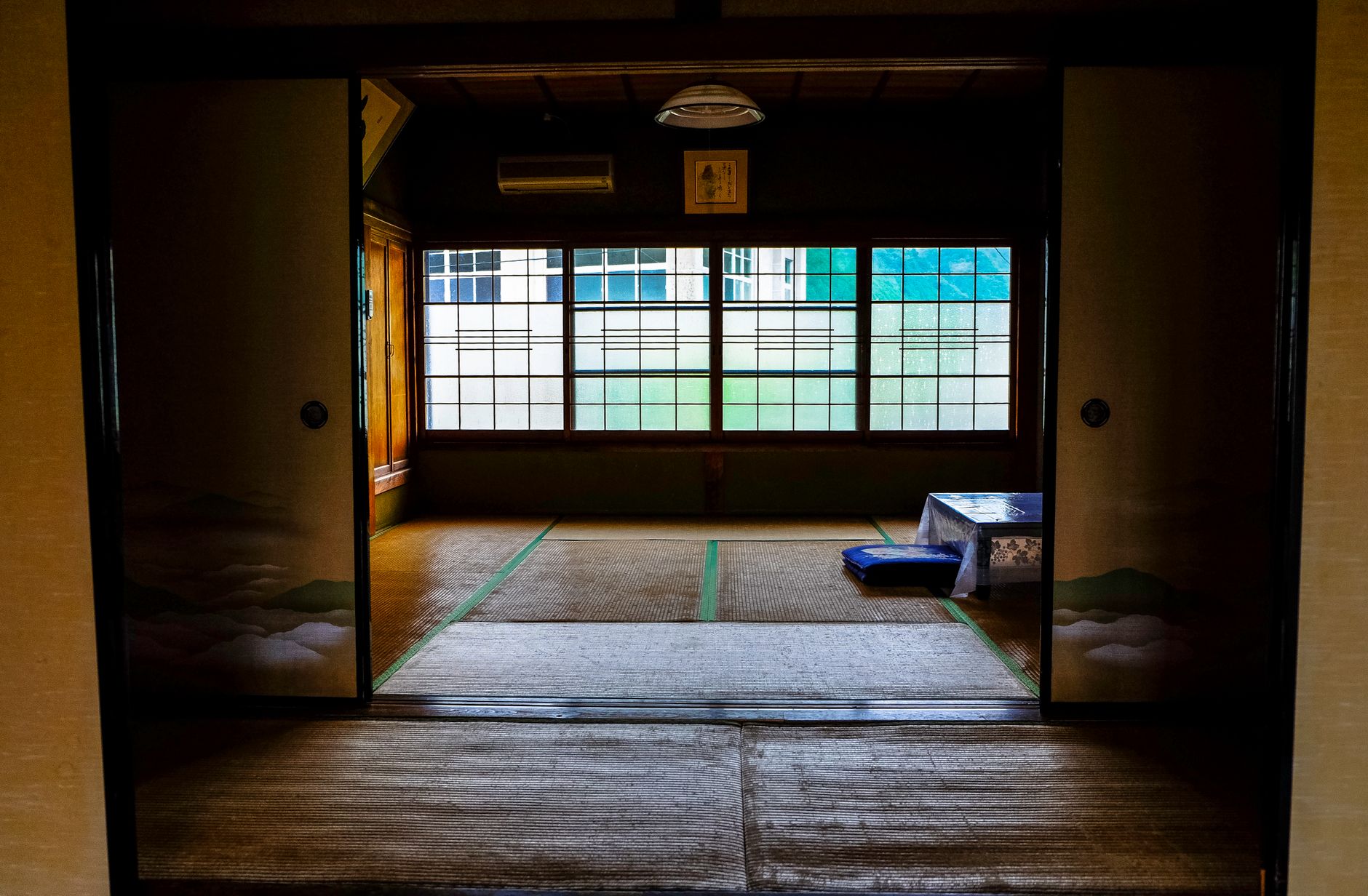
Photography by 111111 Editorial Field Dispatch • Higashiyama District, Kyoto
Dossier Navigation
To step across the raised wooden genkan of a traditional Kyoto ryokan is to observe time decelerate. Outside the lattice door, modern motorcycles hum and commuters hurry toward Karasuma subway station; inside, the only audible presence is the drip of a bamboo water pipe into a stone basin draped in moist moss.
1. The Threshold: Transitioning Out of the Street
In classical Japanese residential architecture, spaces are never abrupt. Transition is mediated through progressive thresholds: from paved public stone to wet gravel, then to smooth river pebbles, and finally to soft, fragrant rush-grass tatami. By relinquishing your leather boots for soft linen slippers, your posture immediately shifts.
The ryokan room itself is notably empty of Western furniture. There are no heavy desks, tall armoires, or intrusive television monitors. Instead, the eye rests upon an alcove—the tokonoma—featuring a single hanging calligraphy scroll selected to reflect the exact meteorological phase of the week, accompanied by a ceramic vase holding a solitary camellia bud.
2. In Praise of Low Illumination and Hinoki Cedar
As Tanizaki Jun'ichiro observed in his seminal treatise on aesthetics, traditional Japanese beauty resides not in brightness, but in the subtle gradients of shadow. Light enters through washi paper screens, diffused until harsh corners dissolve.
Before dinner, guests are invited to the private onsen bath lined with aromatic hinoki wood. The water, drawn from mineral thermal springs beneath the valley floor, warms the bone-deep fatigue of long air travel. Emerging in a freshly ironed cotton yukata robe, one feels restored to a blank, receptive slate.
3. Broth as Poetry: The Multi-Course Kaiseki Narrative
Kaiseki dining is frequently misunderstood in the West as an exercise in culinary ostentation. In truth, it is an austere ritual honoring hyper-local seasonality. The soul of every dish is dashi: an infusion made from aged kombu kelp sourced from the cold shores of Rebun Island and dried bonito flakes shaved moments before immersion.
Over the course of two and a half hours, eight to ten delicate courses are served directly in your room by a gracious kimono-clad attendant (nakai-san):
- Sakizuke: Steamed seasonal greens with toasted sesame cream.
- Suimono: Clear dashi soup featuring local tilefish and shredded yuzu zest.
- Tsukuri: Sashimi caught that dawn in Wakasa Bay, sliced with surgical reverence.
- Yakimono: Wild sweetfish grilled over binchotan white charcoal with mountain salt.
4. Guest Etiquette and Mindful Presence
When staying within historic wooden sanctuaries, respect and mindfulness are essential. Walk lightly on the fragile tatami mats, never set wheeled luggage on straw flooring, and honor the silence of adjacent guest quarters. It is an architecture that does not isolate you from your surroundings, but gently gathers you into them.
Related Field Essays
Silence on the High Ridge: The Quiet Resurgence of Alpine Rifugios
High-altitude mountain shelters rejecting mass tourism in favor of slow warmth.
Americas • WildernessThe Edge of Granite: Charting Solitude Along Chilean Glacial Corridors
Expedition logs tracing marine fjord passages beneath Patagonian walls.